
Besides not panicking every time an email notification comes through, there are a few New Year’s resolutions that can help you succeed as a new attorney in 2024. Setting one (or all) of the below resolutions – and committing to ways to achieve them – is a great start to setting yourself apart and setting yourself up for success as a lawyer.
Below, find the top 10 resolutions for the new year for people new to the law.
No. 1: Respond to Incoming Emails Within 24 Hours
There’s nothing worse than not receiving a response you need, right? Oh yeah – finding that email you never responded to from three weeks ago that you definitely should have responded to. Easy: check it, acknowledge it, categorize it, and prioritize it. Do this at regular intervals. Repeat.
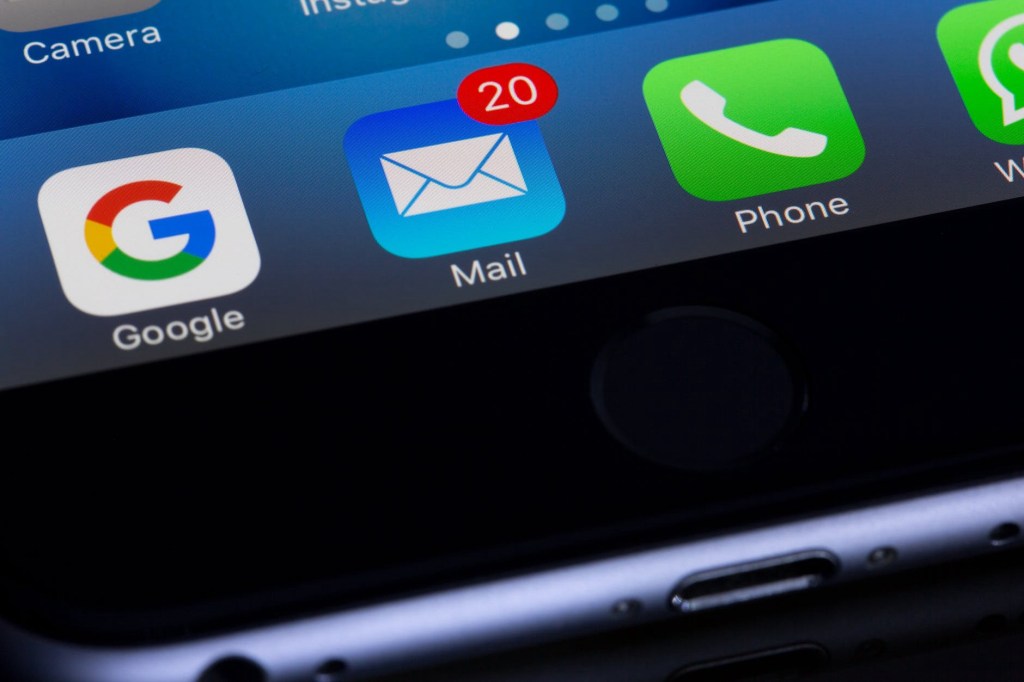
I’ll say it again, because it’s really that easy when an email has arrived in your inbox: check it, acknowledge it, categorize it, prioritize it.
That’s it’s.
I’ll even put it in a fancy list with some detail:
- Check it ✔️
- Two options here (not to overcomplicate the simple thing we have going here): you can either check emails in batches every 2-3 hours, or you can check each one as they come in. Sometimes you’ll be forced to practice one or the other.
- (1) Check your new emails every 2-3 hours. Every hour seems to interrupt too frequently to be beneficial, and any longer means you risk missing something important. You won’t miss anything that “needs” to get to you before lunch or before you leave for the day, but you’ll also be able to focus on other work (and bill for everything better, if that’s the name of your game). *side note: if you do this, you most likely have to turn push notifications on for your emails so that emergent emails pop through, and you will most likely need to share your cell phone with other attorneys for emergencies.
- (2) Check each email as it comes in – which is possible if you’re the type of attorney/lawyer that gets a reasonable number of emails. In this method, you have notifications on for all emails to all devices, and briefly check each one as it comes in at the next practicable moment. It means you’ll never miss an emergency email, you’ll limit the number of phone calls you get (although often faster and more effective than the emails), and you’re ever-present “unread” number will stay down.
- Two options here (not to overcomplicate the simple thing we have going here): you can either check emails in batches every 2-3 hours, or you can check each one as they come in. Sometimes you’ll be forced to practice one or the other.
- Acknowledge it 📧
- Again, you have a few options depending on the type of email. Is it something simple that is resolved with your reply? Is it a legal question that will involve research and won’t get don’t same-day? Is it a question from a colleague that could be addressed over lunch?
- No one can script the perfect response to every email for you (unless AI is your thing). This comes down to the traditional lawyer response: it depends. But a good rule I follow: reply to everyone that isn’t automated within 24 hours, and at least let them know the parameters – what, when, and from who – to expect work product. Also ask any clarifying questions to get the ball rolling and value everyone’s time – including any associates or interns you may one day be forwarding the email chain to with a “please handle” message.
- Categorize it 📊
- See no. 2, below. But sneak preview: have a system for organizing emails. Whether it is by case/matter, type of assignment, deadline – doesn’t matter. But create folders, learn to use the programming available to you through your email software, and organize the emails that come in. Don’t leave your inbox as a free-for-all where emails can be lost, overlooked, or forgotten.
- Prioritize it 🥇
- Again, see no. 2, below. Come up with a system to notate the priority of certain emails and projects, and a system of reminders so that you don’t miss anything important in 2024.
No. 2: Create a System to Keep Track of Emails (that works & you’ll stick to)
All that work up-front responding to and organizing emails means nothing if you don’t put them to work the right way. Work smarter, not harder!

As referenced above, this resolution speaks to actually organizing your email inbox in a way that makes it both efficient and effective. Essentially – don’t just acknowledge every email, but actually do something beyond reading and replying to it.
Forgot to record some billables one weekend when you were sending emails from your phone? If they are auto-programmed to save into a folder for a specific matter or type of project, with specific tags, it will be easy to find the emails and figure out what you should have billed.
Need to transfer a file, case, or matter to a colleague in your office? Print the emails out – or, save them to the digital file – and they will have an up-to-date chronology and transcript of all recent communication on the case. This can be more helpful than you realize as a new attorney.
For whichever email host/server your office uses, there are videos and tutorials online for how to use the special features. I’m a semi-reformed technophobe, and I was able to figure it out – just follow the instructions. Your office’s technology support team (if you have one) may also be able to help.
Figure out what you need, figure out how to make email work for you, and put it to work.
No. 3: Be Mindful of Deadlines
This doesn’t just mean keeping track of deadlines – it means being intentional about your plan to get through each one without panic. Whether the task actually gets done ahead of time or not.

Deadlines can be easy to manage, it’s the discipline part that’s tough. You need to be able to “grin and bear it” and get it done to avoid procrastination. But, if you take even minimal steps in advance, even procrastination can be made less painful as a new lawyer.
It’s simple to manage deadlines to avoid stress:
- Calendar or record the deadline as soon as you become aware of it.
- Figure out how much time you will need to initially complete and/or prepare for the deadline.
- This requires three parts:
- (1) Identifying the type of deadline – is this a trial deadline? Briefing deadline? Discovery deadline?
- (2) Identifying how much time this will take – is it complex? Does it involve novel issues? Is it a routine procedure that you’ve handled before?
- (3) Identifying any “soft” deadlines that accompany it – is this a court appearance where witnesses will need to be subpoenaed with advance notice? Will a draft of a brief need to go to the client or a partner?
- Figuring these three questions out lets you start to roadmap how you will tackle any project to meet any deadline.
- This requires three parts:
The tough part? Buckling down and doing what you identify in the answers to the three questions above. There’s no way around that, but focus on how much better it will be to relax once the project is done. Until the next one.
No. 4: Dress for Success (more often)
While dressing down has its perks, and most offices have relaxed their dress codes, the way you are perceived (especially as a young lawyer) can rely heavily on appearances. Sorry, it’s the truth. And you look better dressed professionally – plus, isn’t that the tone you want to set?


This one is pretty straightforward – dress for the job you want, not the job you have. Want to be a partner at your firm one day? You have to show them you know how to “turn it on,” reliably, when they need you to. This takes more than showing up for a year or two in top form.
Want to be one of the “great” trial attorneys in your area? You have to show up to court, ready to hit the ground running, and commanding authority, for much more than one to two years.
What is one (major) factor in cultivating credibility, authority, and identity as a lawyer? Your appearance.
I get that appearances shouldn’t control, but this is an industry where you are being paid to repeatedly and quickly establish relationships with others – your first impression is often an email, and your second it often how you look when they meet you/see you in court.
I’m not saying don’t be an individual – I definitely have a . . . unique style for my line of work. But it’s never a distraction, it is always neat, and I am always well-groomed. So be yourself, but the best version. I’m
No. 5: Show Kindness (more often)
You never know which fellow lawyer or one of the many paralegals, administrative professionals, or clerks might need it. Everyone is living their own life, with their own problems, and may have dealt with other jerks that day.

This is another truly simple one: take a breath, choose kindness. It’s actually that simple.
It is easy to get caught up in the frustration of being a lawyer. Pile being new to it on top of everything else, and there are days where you feel like you could downright spit fire.
Just don’t spit fire at people who didn’t start it. Doesn’t matter if they add to your no-good day – they’re probably having one of their own. In this profession there’s no shortage of those (think service industry on steroids).
No. 6: Be Proactive About Problems
The easiest way to solve a problem is to start before it happens – having systems in place to identify problems early and the ability to mobilize solutions quickly is not only vital to professional success, but it makes or breaks great lawyers.

Let me be clear: there is no crystal ball or secret intuition that will let you foresee every problem before it happens. You will forget a deadline, lose an exhibit, piss off a client, or get a call with a major, immediate legal issue that you never foresaw.
The name of the game isn’t knowing what’s coming, it’s being prepared for it.
Have people that are the “go-to” for certain issues if they arise – a.k.a. a “chain of command.” Have certain predictable structures for responses to specific types of issues so that when something does happen, you can focus on the issue, and not first how to respond to it.
Finally, while you can’t specifically predict what is going to happen – you can anticipate it. Anticipating staffing issues, scheduling concerns, training problems, etc. will help you to formulate the different types of responses that you need to prepare.
Even as a young attorney, who typically won’t be involved in planning solutions, it is vital to identify the practices of your office and to find (or create for yourself) a chain of command you can reach out to.
No. 7: (*try to) Maintain a Work-Life Balance
Easier said than done. I’ll be the first to admit it. But you have to set the resolution and constantly be working at a work life balance in order to have one. The balance is the process itself, not the result.

The subheading here really speaks for itself. Work-life balance, whatever that “is” – is a process. It’s like a form of yoga; a constant process of feeling your way through things.
This year, make the resolution to improve your work life balance. Engage in your hobbies more. Take a new class. Get a dog. See your friends and family more. Watch more Netflix. Camp more. Whatever it looks like to you when you think about dedicating time to something purely because it makes you happy, and not because it has anything to do with work or being a lawyer.
The decision and the attempts thereafter are the balance.
No. 8: Create a Calendar System that is both Practical and Accessible
Being able to strive for balance between work and life, and being able to minimize the stress that comes with the chaos of attorney calendars, is having constant access to a calendar that works for you.

To end on a practical note: a well-organized, well-maintained calendar is the key to your success with any resolution you set as an attorney.
If you want to get everything done, have your colleagues know where you are when they need you, and know when you’re free to work on the whole “balance” idea – you’re going to need a reference point.
There’s no one-size-fits-all solution that will work for everyone, but personally I keep a color-coded paper calendar on my wall in my office because it helps me to see schedule. my assistant puts it into my email calendar that is shared with my team and that makes it accessible on my iPhone and Apple Watch as well.


Leave a Reply